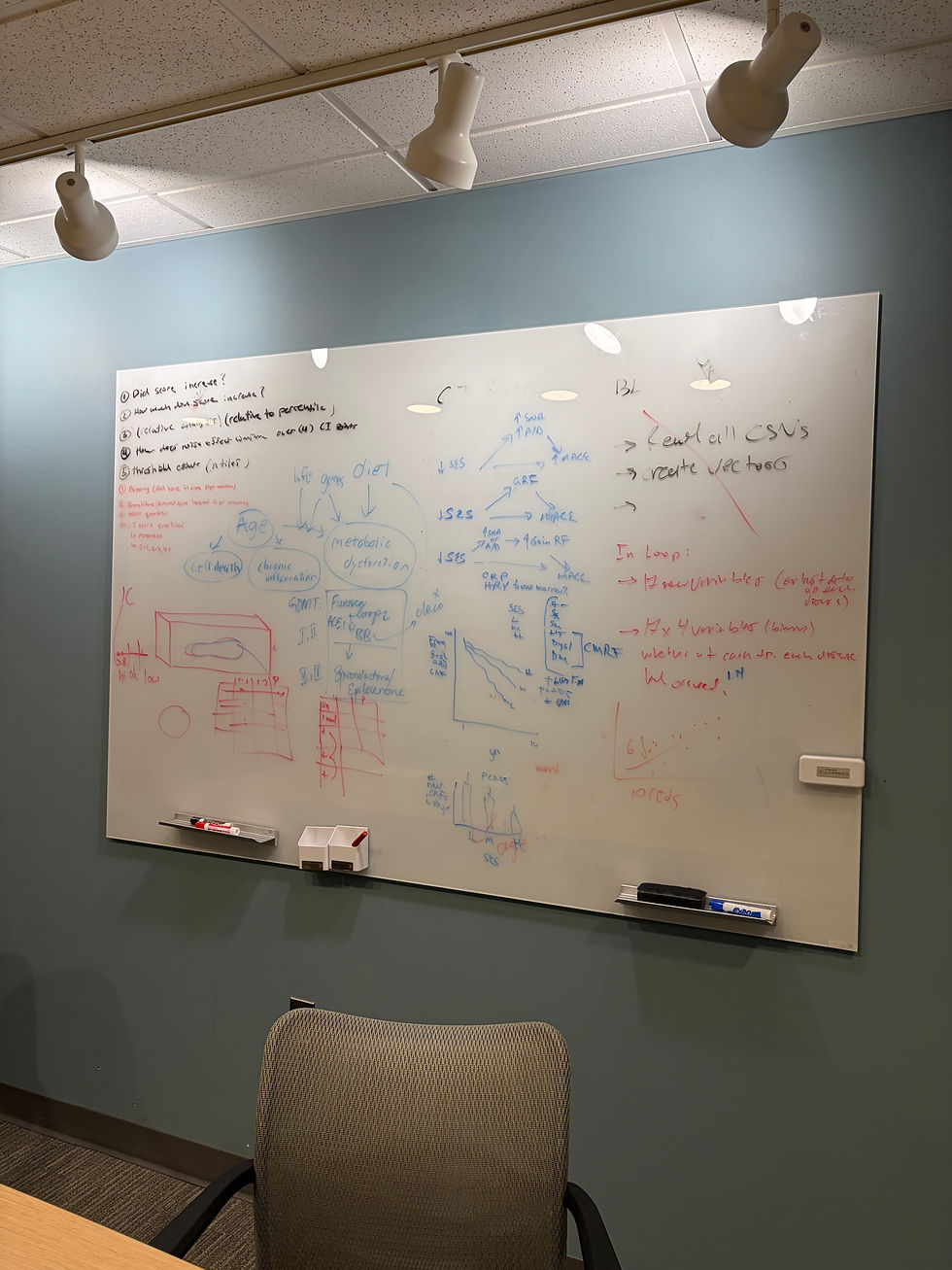
MGH Internship
worked with Dr. Ahmed Tawakol and his research team at MGH in the Cardiovascular Imaging Research Department. I will continue my work with Dr. T and his team throughout the summer, where I will be working alongside other interns and research fellows. During the first couple of weeks, I completed classes on patient confidentiality, good clinical practice, and other requirements necessary to be added to the protocol. I attended multiple online sessions where I learned a lot about the behind-the-scenes aspects of a research team and the importance of properly handling sensitive data and designing research studies. I also attended a full-day, in-person class on the EPIC software, which stores patient data for most hospitals and medical institutions in the area. I spent the remainder of my time researching potential studies the team could pursue before deciding to study the effects of Mondays on heart attacks. We recently began analyzing this data and will continue exploring it throughout the summer in hopes of eventually publishing a study.


Researching Potential Studies
I spent the second couple weeks looking into studies that we could pursue as a research team. His team is focused on studying the relation between stressful events and myocardial infractions (heart attacks). I looked into long weekends, holidays and Mondays - all of which showed higher than average heart attacks reportings. Because the team wanted to focus on stressful events, I had to keep in mind that many of the results could be caused by non stress factors, like hospitalization delay and overconsumption. This helped me better further my research and analysis skills.


My Study Findings
I found our most promising study focused on the connection between Mondays and heart attacks. The data showed that the start of the workweek was associated with the strongest stress-related effects, particularly among working adults. Several factors may contribute to this trend, including sleep disruptions after the weekend and delays in seeking medical care. However, because the effect was most pronounced in the working population, it is reasonable to conclude that stress played a significant role.
After identifying these findings, I gathered supporting data and presented it to the team. We then launched our own study on Mondays and heart attacks to further investigate the hypothesis that the heightened stress associated with Mondays may increase the risk of myocardial infarctions and that greater public awareness of this risk is needed.


Preparing for the Study
To begin analyzing the data, I worked through 20 years of dates, marking Mondays, holidays, and the days following holidays to see whether our patient data supported any of our potential studies. I created this spreadsheet and then completed double data entry to ensure accuracy. At the same time, one of the research fellows, Mahmoud, was collecting patient information from our Biobank to determine who could be included in the study. Once we finished, we merged our data sets together and searched for significant trends. We found a significant correlation between Mondays and myocardial infarctions, and we plan to continue developing this study throughout the summer.